Fabulous bead project ideas that don't take forever to complete. Our favorite styles are the trendy, classic, adventurous, the colorful and sophisticated. Most projects can be completed in 1-2 hours, a short afternoon or evening. You will also find information about beading techniques and helpful tips. We offer convenient online shopping at www.BeadBee.com or call us at 407. 895. 0062.

Thursday, April 22, 2010

A Simple Beaded Keychain for Every Skill Level


Hand made beaded keychains are simple to make and are a great activity for both kids and adults. Many people have created them as fundraisers or as gifts. All you need are large hole beads and alphabet bead beads to spell out a special message. No tools are necessary except for a pair of scissors.

Click here for detailed illustrated directions on How to Make a Beaded Key Chain

Tuesday, April 13, 2010

A Heritage of Inspiration: Creating Jewelry with Czech Glass Beads

Hello Everyone!

For this blog, I wanted to focus on the beautiful Czech Glass Beads that you can find at Bead Bee. The reason I'm so interested in these beads is because they're linked with my heritage, and I wanted to find out a little bit of history on them.

In essence, Czech Glass Beads were made from the ideas and demands of people all over the world. In the mid 1800s, Czech "sample men", as they called them, would travel the world trying to figure out what kinds of beads people wanted. They took back their notes and sketches to their home factories where the beads were produced. After a while, technological advances made it possible for Bohemia to mass produce pressed-glass beads. As a result, by the 1920s Czechs became the main bead exporters of the world.

I created a memory wire bracelet using turquoise Czech flower glass beads, jet Czech petal beads and tortoise Czech fire polished glass beads. For added detail, I added antique copper spacers. I picked these colors because I haven't seen these colors used together on jewelry. This bracelet can be worn dressed down with a white t-shirt, jeans, and flip flops, or dressed up with that "little black dress" you save for special occasions. Please leave questions and comments to let me know what you think!

Brianna

Brianna is our guest blogger for this Spring/ Summer season - welcome Brianna! Click here to send Brianna message or leave a comment.

Saturday, April 10, 2010

Girlfriends & Beads

Beading is such a nice hobby to share with your friends and family. Last Saturday, my beautiful and awesome friends Brianna (our guest blogger), Bethany and I spent the afternoon beading and then went out for a delicious dinner. We talked, laughed and shared ideas.

Bethany made a precious pink lanyard to wear at her new job.

Brianna created a gorgeous Turquoise Flower Cuff Bracelet, see her blog post for details on making this bracelet for yourself (coming soon).

I created a gorgeous pendant necklace featuring a Thai silver rose pendant surrounded by gemstones, you can see it in this blog post: Rose Bouquet Necklace

Tell us how you have fun beading with your friends and loved ones, please leave a comment!

Friday, April 9, 2010

Rose Bouquet Necklace

This Thai silver rose pendant is absolutely exquisite. I wanted to create a sophisticated, garden inspired necklace featuring this rose in a cluster, surrounded by gorgeous gemstone beads that include blue topaz, pink topaz, chrysophrase and rhodonite.

To create this necklace, attach beads and charms to a piece of chains. The rose pendant is attached to the chain with a jump ring and all of the gemstone beads are wire wrapped and attached to the chain as well. I chose beads that were no larger than 6mm so that the rose pendant would remain the focal point of the piece.

When beads are wire wrapped and attached to chain, they dangle elegantly. Using this technique to attach beads to chain can also be used to create earrings.

If you are new to wire wrapping and want to learn how to wire wrap top drilled gemstone beads (mostly tear drop shaped briolettes with the holes drilled horizontally across the top), click here to see illustrated wire wrapping instructions on our Bead Bee website.

Wednesday, March 31, 2010

My First Bead Box

A few days ago, I discovered a dusty old tackle box while cleaning out a closet in my house - it was my first bead box.

When I first started beading, I was instantly addicted and this little plastic box filled up quickly and overflowed into a large basket, which then grew into a spare room in my house.

Here are some forgotten treasures that I found in my first bead box:
  • Gray pearl daisy chain necklace
  • Antiqued copper filligree components
  • hanks of gorgeous Czech 15/0 seed beads
This little old box brought back all the memories of why I started beading, the eagerness to learn all about making jewelry, coming up with new jewelry designs and having fun discovering new beads and the ideas that they inspired. As I look back, I think of how lucky I am to still have the same passion about beading and jewelry design today.  What memories do you have about when you first started beading?

Monday, March 29, 2010

Large Link Chain Gemstone Briolette Necklace

This is a simply elegant necklace that will showcase gorgeous gemstone briolettes on sophisticated sterling silver links.

Create this necklace at loose choker length. This will allow the necklace to drape around the neck in a circular shape. Choose a larger link chain for added drama. The chain featured in this example has 12mm links. When cutting the chain, don't forget that the clasp that you choose will add about 1" to the total length of the necklace.

Next, select one briolette per chain link. You may choose to arrange the briolettes according to color and size before wire wrapping them onto the chain.

I have been saving these exquisite tourmaline briolettes and this project is perfect for them. The size of the large chain link is well proportioned to the 10mm briolettes and the rich color of the stones makes them the perfect beads to show off in this design.

If you want to use smaller briolettes or other shapes, you may choose to attach more than one bead to each chain link. The result will be just as stunning.

Here are several way to attach a clasp to the chain to complete the necklace:
1) Use open jump rings to attach your choice of a clasp
2) Use matching beads to wire wrap the clasp to the chain
3) Use a matching satin ribbon to tie the chain around your neck
4) Use a simple "S" hook - see photo below 

To purchase products featured in this blog post, please use these links:
Sterling Silver Chain

Gemstone Beads
S Clasp
Sterling Silver Wire

Saturday, March 27, 2010

Gemstone Lariat Necklace

Here is a version of a lariat necklace that features gorgeous freshwater pearl bead strands sprinkled with multi-colored gemstone beads. An ornate sterling silver toggle serves as the focal point.

I really love the poetic combination of the rich gemstones in this necklace design. The pearls add to the classic style that can be dressed up or down. The gemstone beads used include: amethyst, pink chalcedony, green chalcedony, apatite, pink topaz, prehnite, london blue topaz and lemon quartz.

Lariat necklaces are typically designed to be long and graceful. Since I used small rice pearls, I chose to make this necklace two strands so that it would a little more dramatic.

Materials
Ornate Sterling Silver Toggle
Freshwater Rice Pearls
FlexRite Beading Wire
Sterling Silver Crimps
26 gauge Sterling Silver Wire
3 Sterling Silver ball pins
Gemstone Beads include Amethyst Tear Drop Beads, Pink Chalcedony Briolette Beads, Green Chalcedony Briolette Beads, Blue Apatite Rondelle Beads, Pink Topaz Rondelle Beads, London Blue Topaz Briolette Beads, Lemon Quartz Twist Briolette Beads

Instructions
You will need one 36" strand and one 38" strand of Flex-Rite beading wire (I used medium weight, however, a few of the pearls and gemstones didn't fit. I prefer to use medium weight for the strength and am willing to sacrifice a few beads in the process. However, light weight beading wire will work fine.

String beads in the desired pattern onto the flexible beading wire. One end of each strand should be attached and crimped to the toggle ring. The other ends should be thread through the toggle ring. (See Photo A, below)

Next, wire wrap your choice of larger size gemstones (8mm or larger) onto ball pins to create dangling beads. The wire wrapping will create loops above the beads so that they can be attached to the ends of each strand. (See Photo B, below)

Start with the unfinished end of one strand, string on a crimp bead, thread the beading wire through beaded dangles and crimp. Repeat with the second strand.

Related Posts:

How to Wear a Lariat Necklace
Simple Lariat Necklace (design idea)

To purchase products featured in this blog post, use the following links:
Ornate Sterling Silver Toggle
Freshwater Rice Pearls
FlexRite Beading Wire
Sterling Silver Crimps
26 gauge Sterling Silver Wire
Sterling Silver ball pins
Gemstone Beads

Thursday, March 25, 2010

How to Wear a Lariat Necklace

A lariat necklace is typically longer than most necklaces. It does not have a clasp and can be worn in many ways for different looks and can be adjusted to suit different pieces in your wardrobe or to fit different necklines. Here are a few suggestions on how to wear a lariat necklace:

1) Double Wrap - this is a great way to shorten the necklace and achieve a two strand look.

2) High Neck - wear the necklace closer to the neck for a dramatic look when wearing a low scoop neck. The long, graceful dangle can have a slimming affect and can add interest if you wear it with a simple dress.

3) Long V Neck - a more traditional necklace look, also very versatile, great with button down shirts, sleeveless tops, or turtlenecks.


Lariat necklaces are designed in many different ways, depending on how it is made, a lariat necklace can also be knotted, tied, or worn as a belt.

Related blog posts:
Gemstone Lariat Necklace (design idea)
Simple Lariat Necklace (design idea)

Monday, March 22, 2010

How to Choose the Right String for Beading

There are countless choices of stringing materials for beading, so how do you know which to choose? Your choice of stringing material is important because it can affect the look of your design as well as the strength, shape and structure. Here are 5 main stringing materials that I use the most:

Flexible Beading Wire is one of the most versatile types of stringing materials. It is a flexible beading wire made of stainless steel and covered with nylon, making it a nice combination of strength and flexibility. It works with most types of beads including glass, crystals and gemstones, and pearls and very is easy to finish by using just a few findings such as crimp beads, jump ring, lobster claw clasp and a crimp tool.

Flexible beading wire is available in several thicknesses, light, medium and heavy. For most projects, choose medium flexible beading wire with 49 strands. If you are using heavier beads, heavy weight beading wire may be a better choice. For gemstones or pearls with smaller holes than most beads, you may need to use light flexible beading wire because it is slightly thinner.

In order to attach a clasp or findings to flexible beading wire, you will need crimp beads, a crimp tool and a flush cutter. If you need help getting started with crimping, click here to get illustrated crimp bead instructions from our website.

Stretch Bead Cord or Elastic - For making stretch bracelets, you will need a type of stretch cording or elastic. There are many different types, colors and thicknesses. I have used many types and now favor the gossamer stretch cord that we carry at Bead Bee. It knots well and stretches well. There are some brands that barely stretch so they are not as easy to put on. Another type of stretch cord that is easy to use is a type often found in sewing shops, it is a rubber cording that is covered in polyester thread. When the cord is cut, the polyester thread will fray, but you can simply singe the ends. I like this type of elastic cording too because it is durable and the knots hold.

I love making and wearing stretch bracelets - you don't need clasps and findings, and sometimes it is nice for a bracelet to be beaded all the way around and not be interrupted by a clasp.

Memory Wire - Like stretch cord, memory wire does not require clasps and findings. You will need a special memory wire cutter and pliers to curl the ends to secure the beads. Memory wire is springy and maintains its round shape so a clasp is not required to fasten it on your neck or wrist.

Memory wire usually comes in a coil, you can cut it at any length to create single strand, bangle like bracelets, or cut more coils for multi-strand, cuff like bracelets. Simply curl the ends to keep the beads from falling off. Memory wire bead ends are also available, they are beads with one hole, that can be glued onto the ends of memory wire.

Wire -
Beads can be strung on hard wire and head pins and linked together to create beaded chains. Wire wrapping techniques are necessary to do this. The tools needed for wire wrapping include round nose pliers, a flush cutter, chain nose pliers and a flat nose plier with tip.

Chain
- Chain is not really a stringing material, but using chains and wire to wire wrap beads together can create beautiful designs. Beads can be strung directly onto chain such as ball chain or snake chain.

We are happy to help you choose the right materials and techniques for your project so feel free to call or email us, you can even include pictures to assist in answering your questions.


Related Posts:
Soft Flex or Flex Rite?
 

Brilliant Beaded Bracelets
Memory Wire Bangle Charm Bracelet
Attaching Clasps to Fine Chain

Saturday, March 20, 2010

Modern & Simple: Sterling Silver Tube Beads

Sterling silver tube beads are the perfect spacers for larger size beads. They provide a more modern look and will allow the gorgeous beads that you pick to stand out in your jewelry.

Sterling silver tube beads are available in many lengths and thicknesses. They can be straight, curvy or wavy

In this example, I used a sterling silver heishi bead on each side of the glass beads for added detail.

This piece was strung on medium weight Flex Rite beading wire and finished with a simple lobster claw clasp.

To purchase materials featured in this blog post, please use these links:
Sterling silver tube beads
Flex Rite beading wire

Lobster claw clasps

Thursday, March 18, 2010

My Favorite Things Charm Necklace

My great great grandma and her family had come to the U.S. all the way from Czechoslovakia when she was a young girl. Knowing this, I have always been really interested in all things Bohemian, especially jewelry. My first Bohemian inspired piece is what I'd like to share with you in this blog.

My mom and I were in a beading store and the first thing the caught my eye was a glass bead in the form of a globe. I then found a beautiful bronze bead cap for the globe, matching chain and a clasp. To add more color, I incorporated four small glass beads that shared the same colors as the globe bead. I also chose antiqued charms that represent things I like - they help express my personality in the necklace.

To make your own charm necklace, find a component to serve as the focal point, this can be a large toggle or bead. Gather your favorite beads and charms, and use wire wrapping to attach them to the ends of multiple pieces of chain to create a tassel that attaches to the focal point.

You may be surprised what you can scavenge from your bead box or parts from your old or broken jewelry. Another place I like to look is thrift stores or consignment shops where there's an array of unique pieces to choose from. The possibilities are endless, just follow your creativity wherever it takes you!

Brianna is our guest blogger for this Spring/ Summer season - welcome Brianna! Click here to send Brianna message or leave a comment.

Tuesday, March 16, 2010

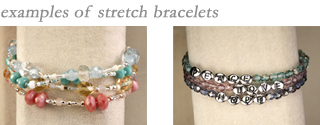
Create Your Own Stylish Stretch Bracelets

Stretch bracelets make fabulous accessories because they are simple to make and don't require any findings or hardware. As far as the stringing material, there are many types of elastic cording and based on my experience, I prefer two types that stretch well and knot well. I have found others don't hold the knot or do not have very much stretch.

One type is the gossamer stretch cord. This is a fiberous, rubbery cording that stretches well and knots well. It is thin will work with most types of beads. The recommended type of knot for finishing this cord is a surgeon's knot. I have never used glue on my knots, but you may if you like.

The second type is an elastic cord commonly found in sewing shops. This is a rubber elastic that has been wrapped in polyester thread. This type of cord often comes in many colors and thicknesses.

Stretch bracelets are also recommended for kids crafts if you don't want to worry about adding a clasp. Elastic cord can be used to create necklaces as well, just make sure the necklaces are long enough to fit over the head without overstretching.

If you are concerned about the strength, quality stretch cord will not break too easily, however, it is not unbreakable. Stretch bracelets should not be worn during physical activity or in any situation where the bracelets are likely to get caught or pulled. You can also reinforce stretch bracelets by using two or three strands of cording. The hole sizes in the beads will have to be large enough to fit the multiple strands, also note that the more strands you use, the less the bracelet will stretch due to the increased resistance of the multiple strands.

Note: Beaded stretch bracelets should also not be given to young children who may choke on small parts should a bracelet or necklace break apart.

Photo: A simple stretch bracelet design using plastic pony beads and plastic alphabet beads, created for a Relay For Life fundraiser.

We would love to help you put together a fun stretch bracelet project for you so please give us a call.

To purchase materials featured in this blog post, please use these links:
Gossamer stretch cord

Plastic pony beads

Plastic alphabet beads